
The SWAMP REVIEW
Behind the Haunting
by Vinny Dutcher
My entire life, I’ve been fascinated by old historical sites and history, especially when they have a grim backstory. These past few years, I’ve taken it upon myself to document these sites by photographing them and writing up some overviews of the history, alongside including my reflections after visiting the locations in a sort of blog-like style. Here are a few of my favorite mini documents I’ve made in the past year.
Northern State Mental Hospital
Northern State Hospital, located in Sedro-Woolley, Washington, was once a lively mental hospital catering to Washingtonians who needed psychiatric treatment. At the time of its establishment in 1911, the treatment provided was considered a step up in psychiatric care, offering a novel treatment approach at the time: occupational therapy. The location I visited was the hospital’s self-sustaining farm, but the history of the main building is fascinating.
Throughout the years, patients were treated unjustly, with discrimination fueling the business as women, alcoholics, people of color, and teenagers were admitted due to discriminatory accusations. Alongside unjust admission, multiple medical treatments for mental illnesses were administered, such as electroshock therapy, insulin shock therapy, and most notably, transorbital lobotomies performed by the inventor himself, Dr. Walter Freeman. On top of the unethical procedures carried out on patients, those who died under care were hastily buried. According to hospital records, 1,487 bodies are buried on the grounds of the asylum, and thousands of cremated remains were found buried in tin cans during the teardown of the building. After decades of operation, the public eventually turned against the operations carried out in the hospital, resulting in government funding quickly ceasing, forcing the building to close its doors in 1976.
Today, only half of the building stands. The history of the hospital is convoluted, with many online sources claiming certain locations to be something they’re not. The location I visited was the hospital’s farm, a part of the occupational therapy that the hospital advertised. Now, like all abandoned 100-year-old buildings, there are vast amounts of alleged ghost sightings and hauntings on the farm. Some claim to have experienced cold spots, disembodied voices, and even sightings of a small girl with a red ball being chased by a man. Do I believe in ghosts? Not really. Especially when people describe sightings as being like something right out of The Shining, but I’d be lying if I said this site didn’t have me on edge the entire time. The best way I could put it was that the energy at this site was off. Knowing how many people were pretty much tortured and killed under the guise of “helping” patients (when in reality it was uneducated discrimination) at this site made me feel terrible. I think people make these ghost stories up to help comprehend and cope with tragedies, and help them ignore the problem at hand. Medical discrimination is a huge topic to tackle, especially because it's still a problem we face in the modern era. Yes, people aren’t getting their frontal lobes stabbed at with ice picks anymore, but race, sex, age, and so many more factors are discriminated against in medical scenarios. So, to the average person, I feel like making these almost fantastical stories up about “patients doomed to roam the grounds for eternity and chasing off visitors" is a way for them to cope with problems we still face to this day. A whole conversation could be had about why ghost stories are made, and I’d like to leave this essay off with that as something to think about.
Sources
https://www.northernstatehospital.org/history
Fort Casey
Fort Casey is an abandoned Naval Defense Base located near Coupeville, Washington. Once a 1800s defense base for the United States Army, it now stands as a historical landmark open to the public.
In 1886, Secretary of War William Endicott ordered that the U.S. military was to build multiple navy bases on the (at the time) unprotected Puget Sound. Construction was approved and quickly began in 1897. The fort opened in 1902 and was named in honor of Brigadier General Thomas Lincoln Casey, a US Army Chief of Engineers. Fort Casey was armed with 35 artillery pieces: seven 10-inch disappearing guns, six 6-inch disappearing guns, two 5-inch balanced pillar guns, four 3-inch pedestal guns, and sixteen 12-inch mortars. It didn’t take long after the opening of the base to find out that keeping the fort was extremely costly. Quick advancements in naval technology quickly made the need for a defense base obsolete. In 1922, the fort ceased operations. The fort wasn’t inactive for too long, though. Once the First (and eventually Second) World War began, the fort was reactivated and used as a training ground for U.S. soldiers, primarily for trench combat and military induction.
Fort Casey remains a steady reminder of Washington’s marine defense history. Living in Washington my whole life, I am constantly reminded of the military presence here, living only a few miles away from an active Air Force base. It seems as if this state mainly prides itself on its air defense, but the number of naval bases and huge warships that rest on the Puget Sound is astonishing. I’m not that big into military history. In fact, quite the opposite. But being able to visit and explore a building that pretty much started Washington’s marine defense is awesome. This was also my first “abandoned” building I explored, visiting when I was really young, and I blame it for getting me into urban exploration. Walking through the rusted, pitch-black halls feels like something straight out of a nightmare, forcing you to use a flashlight as you explore the tight concrete labyrinth of the base. If you’ve ever seen that “SpongeBob in Silent Hill” meme online, that’s the kind of experience you get while exploring the fort. If being terrified by each turn you take isn’t your thing, the beach and field the fort is located in provide absolutely stunning views of the Sound. While I was visiting, I was able to spot a few seals playing in the water at sunset, which was definitely a bit of a refresher after exploring the base. The fort is open to visitors, by the way. I feel as if it's important to mention that I was not trespassing.
Sources
https://parks.wa.gov/about/news-center/field-guide-blog/fort-casey-historical-state-park-history
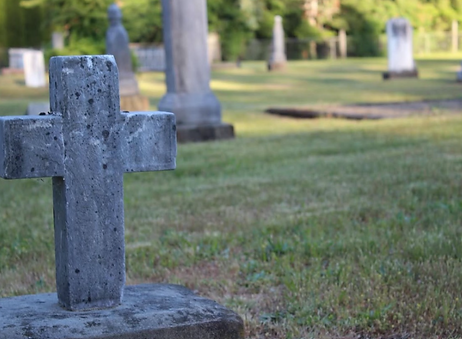
The Black Diamond Cemetery is a Victorian-era cemetery located in Black Diamond, Washington. During the coal boom of the late 19th century, the company was quick to set up a rail line to transport machinery, workers, and their families, settling in 1884. Being owned by a massive, multi-million-dollar business, the town was underwhelmingly named after the company. To say that mining was an easy job in the 1800s is an understatement. Small, unstable spaces and the potential for deadly, unpredictable gas leaks posed threats to the workers. Threats were so bad that mining companies turned to locking canaries in small cages and leaving them in mines, so that if the unprotected, sensitive animal died, it was a sign of a leak. Animal sacrifice aside, mining was serious business, and it shows in the list of the occupants that rest in the cemetery. There is no definitive number of descendants who were miners, but looking through the official registry of those buried, there were a vast number of those killed in mining accidents who were buried.
With all of this devastation occurring in the town, there are bound to be stories of restless spirits haunting the area. Reports of mining lanterns glowing in the night and disembodied voices are constantly reported to this day. In fact, one of my close friends, Cherry, who brought awareness to this cemetery, had a pretty terrifying experience while visiting with a friend of hers. I reached out to her about her account, and the following is in her own words. “I remember feeling followed, and from the corner of my eye, while walking with Steph, I would see figures following us around, which was alarming as there was no one else there. When walking around certain parts of the cemetery, I would hear incoherent whispering that again wasn’t anyone else or Steph. My flashlight, which was on my phone, even flickered a little. Later in the night, I saw where the miners were buried: two black figures moving around in the distance.” Hearing this for the first time naturally freaked me out. I had to visit. Unfortunately, my time at the Black Diamond cemetery had no ghastly sightings like Cherry’s, which left me feeling like I was missing out. However, I did have an extremely peaceful stroll through the cemetery, taking in the manicured flower bushes and beautiful, aged, and intricate graves. I’ve always been a fan of taking walks through cemeteries, which admittedly sounds like I’m trying hard to be an edgy gothic stereotype, but the feeling that the quiet tranquility of the grounds gives is unmatched by anything else. If you ever need to take a second and reflect on life, or even to just meditate, I recommend visiting a graveyard. You’d be surprised to see how many other people do the same.
Sources
https://www.blackdiamondmuseum.org/visit-us/towns-landmarks/black-diamond-cemetery/



My name is Vinny, and I'm a senior at Decatur! I've been making art all my life, and I love to experiment with different art mediums. In my free time, I'm probably playing some Valve game or watching Vargskelethor.